


Cusco has a museum density that’s hard to match in any other South American city. Within just a few blocks of the historic center, you’ll find Inca pottery collections, elite mummies, pre-Columbian textiles, colonial-era Cusco School art, and archaeological remains uncovered during construction projects that ultimately became museums themselves. Not all of them are equally strong or equally essential, but together they offer a layered reading of the region’s history from the earliest settlements in the Andes to the Spanish colonial period. This guide covers Cusco’s top museums, what each one contains, how long to plan for each visit, and how to organize them during your stay in the city.
Contents
- What are the most important museums in Cusco?
- Inka Museum: Cusco’s most complete archaeological collection
- Pre-Columbian Art Museum: archaeology and design in the same space
- Qorikancha Site Museum: the Temple of the Sun beneath Santo Domingo Church
- Religious Art Museum: Cusco School painting
- Other Cusco museums worth visiting
- Practical info for visiting Cusco’s museums
- Frequently asked questions about Cusco’s museums
What are the most important museums in Cusco?
Cusco’s museums can be grouped into three categories based on their focus. The first includes archaeology and Inca-history museums, which hold the city’s most extensive collections of ceramics, textiles, mummies, and ritual objects from the Inca Empire and are essential for understanding what you’ll later see at archaeological sites. The second category is colonial and religious art museums, where the blend of European iconography and Andean elements that defines Cusco School painting is best represented. The third category includes thematic and site museums smaller spaces with specific angles that round out the big picture with details on coca, natural history, or archaeological finds discovered directly beneath the city’s historic core.
Inka Museum: Cusco’s most complete archaeological collection
The Inka Museum of the National University of San Antonio Abad of Cusco is the most recommended starting point for any traveler who wants to understand the empire’s history before visiting archaeological sites. Housed in the Admiral’s Palace, one of the best-preserved colonial buildings in the historic center, the collection spans pre-Inca periods through the Inca Empire with a breadth unmatched anywhere else in the city. The building’s Inca foundations visible in the walls of the inner courtyard add an extra layer of meaning to the visit.
What you can see at the Inka Museum
The collection includes ceramics from different periods and cultures, exceptionally well-preserved pre-Columbian textiles, gold and silver metalwork, musical instruments, weapons, tools, and a quipu collection that helps you understand the Inca system of numerical record-keeping in a way no written description can match. There is also a room dedicated to elite mummies and the ritual treatment of the dead in Inca culture, with items that were buried alongside complete funerary offerings. The visit is organized chronologically, making it easy to follow the evolution of Andean cultures up to the arrival of the Spanish.
Location, hours, and tickets
The Inka Museum is located on Cuesta del Almirante, two blocks from the Plaza de Armas, inside the Admiral’s Palace. Hours are Monday through Friday from 8:00 a.m. to 7:00 p.m., and Saturdays from 9:00 a.m. to 4:00 p.m.; it is closed on Sundays. General admission is affordable, and there’s a discount for students with a valid international student ID. Plan about 1.5 to 2 hours for a thorough visit.
Pre-Columbian Art Museum: archaeology and design in the same space
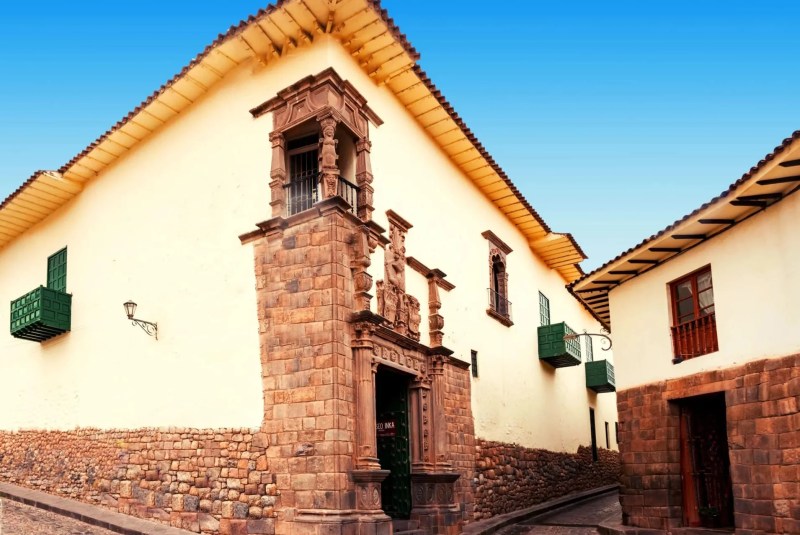
The Pre-Columbian Art Museum known as MAP is Cusco’s most visually polished museum. Set inside Casa Cabrera, a 17th-century colonial mansion built over the remains of an Inca structure, the collection belongs to Lima’s Larco Museum and brings together around 400 pieces selected from the Larco’s holdings of more than 45,000 objects. The selection is exceptional, and the museum design precise lighting and clear texts in Spanish and English turns the visit into an experience that goes beyond a typical archaeology walkthrough.
What you can see at MAP
The collection includes ceramics, metalwork, textiles, and objects made of wood and bone from Peru’s major pre-Columbian cultures from Chavín to the Incas, including Moche, Nazca, Wari, Chimú, and Tiwanaku. Each gallery features standout pieces chosen to represent the best of their period and culture, making the visit a beautifully edited synthesis of 5,000 years of Andean art. The metalwork section, with gold and silver pieces crafted with a precision that’s still hard to explain given the tools available at the time, is one of the museum’s highlights. The inner courtyard, which preserves original Inca stonework, is also open to visitors and offers a clear sense of the architectural layering that defines Cusco’s historic center.
Location, hours, and tickets
MAP is on Plaza de las Nazarenas, less than two blocks from the Plaza de Armas, right in the heart of the historic center. It’s open every day of the year from 9:00 a.m. to 6:00 p.m. Admission is pricier than the city average, in line with the quality of the collection and the museum design. It is not included in the Cusco Tourist Ticket. Plan about 1.5 to 2 hours, depending on your pace.
Qorikancha Site Museum: the Temple of the Sun beneath Santo Domingo Church
The Qorikancha Site Museum isn’t a museum in the conventional sense it’s the gateway to the remains of the most important Inca temple in the empire: Qorikancha, or the Temple of the Sun. The Spanish partially demolished it and built the Convent of Santo Domingo on top of its walls. The perfectly fitted curved Inca stone walls you see today are what remained standing after the conquest, and their state of preservation makes it possible to understand Inca construction quality better than at almost any other site in the city.
What you can see at Qorikancha
The visit includes the Inca enclosures surrounding the Dominican convent courtyard, with finely carved stone walls that have survived earthquakes and centuries of use. Several rooms display ceramics, textiles, and ritual objects linked to sun worship, along with interpretive panels explaining each space’s original function. The inner garden said in Spanish chronicles to have been covered with life-size gold replicas of plants and animals lets you visualize the full footprint of the original temple and understand its true scale. The overlap of Inca and colonial architecture in a single building is visible in every corner of the route.
Location, hours, and tickets
Qorikancha is located on Avenida El Sol, about four blocks southeast of the Plaza de Armas. Hours are Monday through Saturday from 8:30 a.m. to 5:30 p.m., and Sundays from 2:00 p.m. to 5:00 p.m. Admission is partially included in some versions of the Cusco Tourist Ticket it’s best to confirm at the time of purchase. Plan about 1 to 1.5 hours for the full visit.

Religious Art Museum: Cusco School painting
The Religious Art Museum of the Archdiocese of Cusco houses one of the city’s best collections of colonial-era Cusco School painting. Cusco School is a local painting tradition that emerged in the 17th century from the fusion of European religious iconography and Andean cultural elements: Virgins with trapezoidal skirts that echo sacred mountains, archangels dressed like Inca soldiers with arquebuses and feathers, and a color palette that mixes gold leaf with local pigments. The result is a singular style with no true equivalent anywhere else in the world.
What you can see at the Religious Art Museum
The collection includes paintings by some of the most representative Cusco School masters, including Diego Quispe Tito and Basilio Santa Cruz Pumacallao Indigenous or mestizo artists who adapted European techniques to a deeply Andean worldview. Beyond paintings, you’ll also find colonial furniture, liturgical ornaments, religious sculpture, and a collection of Mudéjar tiles decorating several of the palace rooms. The building itself constructed over the palace of Inca Roca and featuring a carved wooden Mudéjar-style courtyard is one of the most beautiful in the historic center.
Location, hours, and tickets
The Religious Art Museum is at the corner of Hatunrumiyoc and Herrajes streets in the historic center, half a block from the famous Twelve-Angled Stone. It’s open Monday through Saturday from 8:00 a.m. to 11:30 a.m. and from 3:00 p.m. to 5:30 p.m.; it is closed on Sundays. Admission is moderately priced and is not included in the Tourist Ticket. Plan about 45 minutes to 1 hour.

Other Cusco museums worth visiting
UNSAAC Natural History Museum
The Natural History Museum of the National University of San Antonio Abad of Cusco features regional collections of fauna, flora, and geology that are hard to find in any other format. For travelers interested in Andean and Amazonian biodiversity, it offers a useful introduction to the ecosystems you’ll encounter beyond the city from high-Andean ecological zones to the edge of the cloud forest. Its collection of taxidermied Andean birds is among the most complete in southern Peru. It’s located on Avenida El Sol and is open Monday through Friday during standard business hours.
Coca Museum
The Coca Museum is a small but well-documented space dedicated to the history and the ritual, medicinal, and cultural uses of the coca leaf in the Andes. For travelers spending time at altitude especially those who encounter coca from their first days in Cusco the museum provides anthropological and historical context that turns something “curious” into something understandable. The collection includes ritual objects, chuspas (coca bags), llicta, and documentation on contemporary debates surrounding coca. It’s on Calle Garcilaso near Plaza Regocijo.

Pumapunku Site Museum
The Pumapunku Site Museum is built over the remains of an Inca neighborhood discovered during the renovation of Plaza Regocijo. It’s an underground museum where you can see Inca foundations in situ, exactly as they were left when construction was halted to preserve them. A small collection of objects found during the excavation complements the architectural remains. It’s one of the least known museums in the historic center and is often nearly empty, making for a calm visit compared with Cusco’s most popular museums.
Practical info for visiting Cusco’s museums
What’s the best order to visit the museums?
The most efficient logic is to start with the Inka Museum for broad archaeological context, then visit Qorikancha to see Inca architecture in the heart of the city, continue to MAP for the most refined selection of objects, and finish with the Religious Art Museum for the colonial period. This chronological, historical order makes each visit build on the one before it. If time is limited and you can choose only one, the Inka Museum offers the most complete overview of pre-Columbian history and is the best preparation for understanding the region’s archaeological sites.
Are museums included in the Cusco Tourist Ticket?
The Cusco Tourist Ticket includes some city museums, including the Regional Historical Museum and the Museum of Popular Art, but it does not cover the Inka Museum, MAP, or the Religious Art Museum, which have separate admission tickets. Qorikancha is a special case: access to the Santo Domingo convent areas and the exterior garden is covered by the Tourist Ticket in some versions of the circuit, but it’s important to confirm at the time of purchase because the offering has changed over different periods. In any case, individual museum entry fees in Cusco are generally affordable and don’t add up to a major expense within a typical city-visit budget.
How many days do you need for the main museums?
With two full days dedicated to museums, you can visit the four main ones thoroughly and without rushing: the Inka Museum and Qorikancha on day one, MAP and the Religious Art Museum on day two. If you add the smaller thematic museums, a third partial day is enough to cover the Natural History Museum, the Coca Museum, and the Pumapunku Site Museum. Many travelers fit museum visits into the days before heading out to surrounding archaeological sites, taking advantage of the fact that Cusco’s altitude often calls for a day or two of acclimatization before doing more physical activities.
Photography inside the museums
Photography rules vary by museum. The Inka Museum allows photography without flash in most rooms. MAP has restrictions in some galleries with more delicate pieces, so it’s best to ask at the entrance. Qorikancha allows photography in outdoor spaces and the garden, with some restrictions inside the enclosures. The Religious Art Museum has broader restrictions due to the fragility of the colonial paintings. In all cases, tripod use requires prior authorization and generally isn’t permitted without coordination with the museum.
Frequently asked questions about Cusco’s museums
What’s the most important museum in Cusco?
It depends on each traveler’s interests, but if you have to choose just one, the Inka Museum at San Antonio Abad University offers the broadest and most representative collection of the region’s pre-Columbian history. For travelers most interested in object quality and museum presentation, MAP delivers the highest-level experience. For those who want to understand Inca architecture in the context of the city itself, Qorikancha is irreplaceable.
Are there free museums in Cusco?
Some museums in the city offer free entry on certain days or during specific time windows, but policies change often. The Regional Historical Museum of Cusco, located in Casa Garcilaso de la Vega, offers free admission on Sundays. It’s best to confirm directly at each museum’s ticket window once you arrive, since free-entry rules can vary depending on the season and the local cultural calendar.
Are the museums in the historic center, or do you need transportation?
Cusco’s most important museums are all in the historic center or within a 10-minute walk of the Plaza de Armas. The Inka Museum, MAP, the Religious Art Museum, and Qorikancha form a circuit you can do entirely on foot. Smaller museums like the Coca Museum and Pumapunku are also within the historic core. The only one that may require a bit more walking is the Natural History Museum, located along Avenida El Sol.
Is it better to visit museums before or after archaeological sites?
Visiting museums before archaeological sites significantly improves the experience at the sites. Seeing examples of ceramics, textiles, and tools at the Inka Museum before walking through Sacsayhuamán or the Sacred Valley helps you interpret what you’re seeing with context you’d otherwise have to build on the spot. MAP is especially useful preparation for Machu Picchu, because it helps you understand Inca architectural typologies and ritual objects before visiting the site. The acclimatization days most travelers spend in Cusco before heading to higher altitude are the ideal time to take advantage of the museums.
Do museums offer guides in Spanish and English?
Most of Cusco’s main museums have exhibit texts in Spanish and English. MAP has the best bilingual signage overall, with clear, well-written text in both languages. The Inka Museum includes Spanish texts with English translations in the main rooms, though some display cases are labeled only in Spanish. Qorikancha offers optional guided services in multiple languages with advance reservation. For a deeper visit, hiring a certified local guide for any of the main museums adds a layer of context that exhibit texts don’t fully cover.

